
Table of Contents
- Why High Quality Streetwear Is Hard to Judge Online
- The Best Fabric for Streetwear: Weight, Weave, and Blend
- How to Tell If Clothes Are Good Quality: Construction and Stitching
- The Streetwear Quality Checklist: Inspect Garment by Garment
- How to Assess Quality From Product Photos and Online Listings
- How to Spot Fake Streetwear and Misleading Brand Claims
- Fit, Sizing, and Value: Judging High Quality Streetwear Beyond Price
- Frequently Asked Questions
Last Updated: October 21, 2026
Why High Quality Streetwear Is Hard to Judge Online
Spotting high quality streetwear starts with one hard truth: you cannot feel a garment through a screen. GOODVIBE built its CORE line around heavyweight blanks and dense cotton faces, so we know exactly which details separate real quality from marketing noise. Most shoppers judge by the logo. That is backwards.

The fabric tells you more than the graphic ever will. A dense cotton face holds a print sharp. A thin one cracks and pills within weeks. Construction tells you the rest.
Below, we break down the exact checks we use: fabric weight, stitch density, seam type, and how to read a product photo like an inspector. The streetwear quality checklist near the end ties it all together.
The Best Fabric for Streetwear: Weight, Weave, and Blend
The best fabric for streetwear is a heavyweight cotton or cotton-rich fleece, typically over 300 g/m² (about 10 oz/yd²) for hoodies and 4.5 oz/yd² or heavier for tees. Weight signals density. Density signals durability.
Fabric weight is measured in GSM, or grams per square meter. Heavier fabric drapes with structure instead of clinging. It also resists stretching at the neck and hem.
Weave matters just as much. Combed ring-spun cotton feels smoother and pills less than open-end cotton. Look for terms like "combed ring-spun" or "32 singles" on the spec sheet. Those describe finer, stronger yarn.

Blends are not automatically bad. A 60% cotton / 40% polyester tee can be soft and hold shape well. A 100% cotton face on a fleece hoodie takes print detail better. What you want to avoid is a vague "cotton blend" with no percentages listed.
- Hoodies: 300+ GSM fleece with a cotton face
- Tees: 4.5 oz/yd² or heavier, combed ring-spun
- Denim and canvas: tight weave, no visible gaps when held to light
- Avoid: weight unlisted, "premium cotton" with no numbers
How to Tell If Clothes Are Good Quality: Construction and Stitching
You can tell if clothes are good quality by checking three things: stitch density, seam type, and finishing. Each one is visible in person and often in a close-up photo.
Stitch density is stitches per inch. A tight, even row of 10 to 12 stitches per inch signals care. Sparse, wobbly stitching signals speed. Run a finger along the inside seam. Loose threads and skipped stitches are red flags.
Seam type decides how a garment ages. Side-seamed construction holds shape better than tubular cuts. Flatlock and coverstitch seams lie flat and resist fraying. A single row of basic stitching on a stress point, like the armhole, will fail first.
Finishing covers the small stuff: bartacks at pocket corners, reinforced belt loops, clean neck taping. These cost money to add. Their presence tells you the maker cared.
The Streetwear Quality Checklist: Inspect Garment by Garment
Use this streetwear quality checklist before you buy. Work through it in order, and you will catch most bad buys before money changes hands. The key is to inspect in a fixed sequence: fabric first, then seams, then stress points, then finishing. That order matters because a great seam cannot rescue weak fabric, but strong fabric can survive a minor finishing flaw.
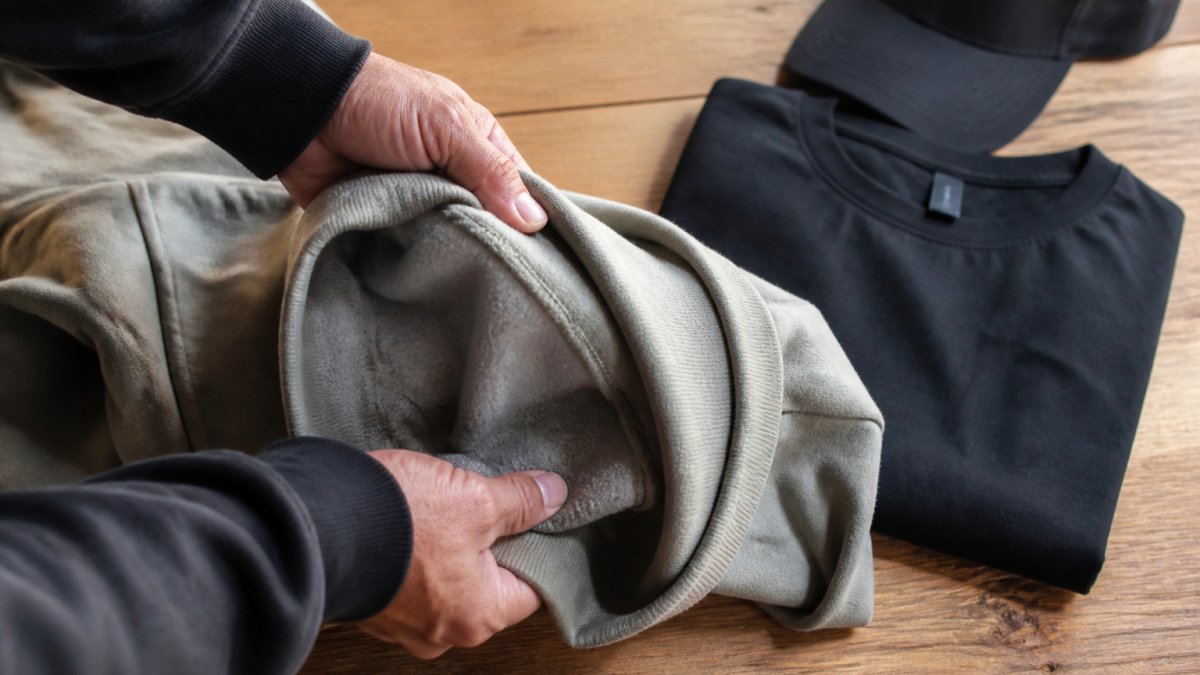
Hoodie or sweatshirt:
- Fabric weight listed at 300 GSM or higher
- Cotton face yarn stated on the spec sheet
- Three-panel or lined hood that holds shape
- Metal eyelets and heavy drawcords
- Ribbed cuffs that snap back when stretched
- Inside fleece looks dense and even, not patchy or balding
- Kangaroo pocket edges are bartacked or reinforced
- Shoulder seams are flatlocked or coverstitched, not single-stitched
T-shirt:
- Weight of 4.5 oz/yd² or higher
- Combed ring-spun or similar fine yarn
- Shoulder-to-shoulder taping inside the neck
- Ribbed collar that does not flare
- Side seams, not a tubular body
- Hem is double-needle stitched with no skipped stitches
- Print feels flexible and sits on the surface, not soaked in
Pants and denim:
- Fabric has a tight weave with no visible gaps when held to light
- Belt loops are bartacked at both ends
- Fly and crotch seams are double-stitched or chain-stitched
- Pocket bags are made of sturdy cotton, not thin lining
- Hardware (buttons, zippers, rivets) feels solid and operates smoothly
- Hem and waistband stitching is straight and dense
Outerwear and jackets:
- Main zipper is a named brand or heavy-gauge metal, not a lightweight coil
- Storm flap and collar edges are cleanly finished
- Lining is attached without loose threads or puckering
- Cuffs and hem have reinforced stitching or ribbing that recovers
- Pockets are bartacked at stress points
Every garment:
- Seams flat and even, no puckering
- Print flexes without cracking
- Care label with fiber percentages
- Measurements published, not just S/M/L
- Inside finish is as clean as the outside
How to Assess Quality From Product Photos and Online Listings
Quality assessment from photos comes down to what the seller chooses to show. Honest listings photograph the inside, the seams, and the fabric up close. Weak listings show only the front graphic on a model.
Start with the zoom. A close-up of the fabric should show a tight, even knit. If the texture looks fuzzy or loose, the yarn is likely coarse. Check the seams in any flat-lay shot. You want straight, dense stitching.
STATIC & SUN CORE // "Triple-Hit" Heavyweight IND4000 Hoodie →
Read the spec list like a contract. Look for fabric weight, fiber percentages, and the blank manufacturer. A listing that names its blank, like a specific heavyweight fleece style, is usually confident about the product. A listing with no numbers is hiding something.
Compare the measurements table to a garment you already own. Chest width and body length tell you more than a size label. Measure a tee or hoodie that fits you well, then compare those numbers to the listing's chart.
Use customer photos in reviews as a second inspection. Look for images that show the garment after washing, not just on arrival. Pilling, collar flare, and print cracking often appear in real-world photos before they appear in seller images.
- Photos of the inside seams and neck taping
- A stated fabric weight in GSM or oz
- Fiber percentages, not just "cotton blend"
- A real measurements chart
- Customer photos in reviews
- Stated origin and care instructions
How to Spot Fake Streetwear and Misleading Brand Claims
You spot fake streetwear by checking the details counterfeiters skip: stitching consistency, hardware quality, and label accuracy. Fakes copy the front. They rarely copy the inside.
Look at the tags. Genuine brands use clean, evenly printed labels with consistent fonts. Counterfeits show blurry print, crooked placement, or misspelled text. Check the care label too. Real manufacturers list fiber percentages and origin.
Hardware is another tell. Zippers, eyelets, and snaps on real pieces feel solid and engraved. Fakes use lightweight hardware that rattles or sticks.
Then there are misleading claims from legitimate-looking sellers. Watch for these:
- "Premium cotton" with no weight or fiber spec
- "Limited drop" language on permanent stock
- Sustainability claims with no certification named
- "Exclusive" pieces that restock endlessly
The FTC guidance on green claims requires marketers to back environmental statements with evidence. If a brand cannot name its certification, treat the claim as decoration.
Fit, Sizing, and Value: Judging High Quality Streetwear Beyond Price
Value in high quality streetwear is cost per wear, not sticker price. A heavyweight hoodie at a higher price that lasts several seasons beats a cheap one replaced twice a year.
Fit and silhouette are part of that value. A garment that drapes well and holds shape gets worn more. Check the cut: boxy and dropped-shoulder reads as authentic streetwear, while a tight tubular tee reads as fast fashion. Neither is wrong, but the cut should match the look you want.
Sizing consistency matters for repeat buys. Brands that publish real measurements and keep them stable across drops earn trust. Brands that change fit every release force you to gamble.
Assess durability honestly. Heavier fabric resists pilling. Tight stitching resists blowouts. Reinforced stress points resist tearing. These are the features that decide how long a piece stays in rotation.
That is where GOODVIBE fits in. Our CORE pieces are built on named heavyweight blanks with published specs, from the 10.0 oz/yd² (330 GSM) Independent Trading Co. IND4000 Heavyweight Hooded Sweatshirt to the 4.6 oz/yd² American Apparel 2001CVC Unisex CVC Tee.
- Compare cost per wear, not sticker price
- Check the cut against the silhouette you want
- Confirm sizing charts are published
- Weigh durability features against price
Frequently Asked Questions
How can you tell if streetwear is high quality?
Start with the fabric weight and face. A heavyweight fleece around 330 GSM (roughly 10 oz/yd²) with a dense cotton face holds shape and takes prints cleanly, while thin, see-through knits tend to pill and stretch out. Then check construction: side seams for a tailored drape, shoulder-to-shoulder taping on tees, reinforced 8-row stitching on cap bills, and prints that flex with the fabric instead of sitting rigid. Finally, confirm fit and measurements match the brand's size chart, and look for a brand that publishes real specs like garment weight, blank manufacturer, and fabric blend.
What fabrics are best for durable streetwear?
For hoodies and fleece, a heavyweight cotton-rich blend such as 70% cotton / 30% polyester 3-end fleece with a 100% cotton face gives you warmth, structure, and sharp print clarity. For tees, combed ring-spun cotton or a 60% combed ring-spun cotton / 40% polyester CVC blend balances softness with shape retention. Supima cotton is a strong pick for softness and longevity. Avoid very lightweight knits under about 4 oz/yd² for daily rotation, and treat any listing that hides fabric weight or blend as a warning sign.
How can you spot fake streetwear brands?
Fakes usually fail on details. Check the neck label and care tag for consistent fonts, correct spelling, and a real manufacturer name. Compare print edges: authentic DTF or screen prints sit clean and flex with the fabric, while counterfeits crack, feel plastic, or sit on top of the weave. Look at stitching density on seams and cap bills, and confirm the brand publishes sizing measurements, fabric weight, and blank specs. If a seller shows only hero shots, no interior photos, and prices far below the brand's own site, treat it as a red flag.
Does heavyweight fabric mean better quality?
Not by itself. Weight tells you how dense and warm a garment feels, and heavyweight fleece around 330 GSM does tend to drape better and resist stretching. But a heavy garment with loose stitching, a scratchy face, or a print that cracks after two washes is still a bad buy. Use weight as one data point alongside fabric face quality, seam construction, print execution, and fit. A well-built 4.6 oz/yd² tee can outperform a heavy hoodie with weak construction.
Judging quality takes a few minutes of checking, not a degree in textiles. Look at the fabric weight, the seams, and the specs before you commit. That habit saves you from bad buys and wasted money.
At GOODVIBE, we publish the blank, the weight, and the fiber blend on every CORE piece, so you can run this checklist yourself. Explore the CORE and RETRO CORE collections, check the specs, and shop inventory with confidence.