
Last Updated: November 8, 2026
Quick Summary
What makes streetwear limited edition is a garment produced in a fixed, announced quantity and never restocked, so the edition size itself becomes the product. A true limited edition has a stated edition size or capped run, a release window that closes, and a documented production record.
- A genuine limited release names an exact number, such as 200 or 500 pieces, tied to a production order.
- A real drop has a published date and time, a stated quantity or per-person limit, and a clear end condition.
- Check the resale market 60 days after the drop; heavy supply and flat prices suggest a larger run.
- A restock two weeks after a sellout usually means the first run was never capped.
- Wash cold, inside out, and air dry to protect prints, and keep original tags and packaging.
Table of Contents
- What Actually Makes Streetwear Limited Edition
- How to Tell Real Scarcity From Manufactured Hype
- How to Authenticate Streetwear Before You Buy
- Inside Limited Streetwear Drops: Production to Sellout
- What Limited Editions Do to Streetwear Resale Value
- Streetwear Collecting and Preservation Done Right
- Shop the Next GOODVIBE Limited Drop
- Frequently Asked Questions
What Actually Makes Streetwear Limited Edition
What makes streetwear limited edition is a garment produced in a fixed, announced quantity and never restocked, so the edition size itself becomes the product. At GOODVIBE, we build our SEASONAL OVERRIDE releases around exactly that principle: a fixed run, a closing window, no reprint. Below, we break down what makes streetwear limited edition, how to spot real scarcity from hype, and how to protect what you buy. You can also browse the actual limited drops to see scarcity in practice.
Three things define a true limited edition:
- A stated edition size or capped run
- A release window that closes
- A documented production record
Miss any one of those, and "limited" is just a word on a product page.
Planned Quantities and Edition Size
Edition size is the number a brand commits to before production starts. It is the single most important signal, because it is checkable.
A genuine limited release names a number: 200 pieces, 500 pieces, one run per colorway. That number ties directly to a production order. Small-batch production makes this practical for independent labels, since a factory run of a few hundred units is affordable and traceable.
Artificial scarcity is the opposite. A brand prints a huge run, sells part of it, then calls the leftovers "limited." The Streetwear overview on scarcity tactics notes that some brands cap production on purpose to drive demand, which means the limited label alone tells you nothing about real rarity.
Ask one question: can the brand tell you the exact number made? If not, walk.
Drop Mechanics: Release Windows and Sellouts
A product drop is a scheduled release with a fixed start time, a set quantity, and often a hard end. Drop culture runs on that clock.
The mechanics matter more than the marketing. A real drop has:
- A published release date and time
- A stated quantity or a per-person limit
- A clear end condition, either sellout or a closing date
Sellouts happen fast when demand outpaces supply. A short availability window creates urgency without anyone shouting "buy now."
You can see this framing in practice on our SEASONAL OVERRIDE release window, where the drop is presented as a temporary signal rather than permanent inventory.
Watch out: a "sold out" badge that reappears as a restock two weeks later usually means the first run was never capped. Restocks are fine, but they cancel the limited claim.
How to Tell Real Scarcity From Manufactured Hype
Real scarcity comes from a production decision made before the drop. Manufactured hype comes from marketing applied after it.
The difference shows up in behavior over time. Genuine limited runs do not come back. Hype-driven "limited" items reappear in new colorways, get quietly restocked, or sit in inventory for months while the countdown timer resets.
Here is how we separate the two:
| Signal | Real scarcity | Manufactured hype |
|---|---|---|
| Edition size | Published number | Vague "limited quantities" |
| Restock history | None | Repeated "final" restocks |
| Release record | Dated, documented | Deleted after sellout |
| Resale supply | Thin and stable | Flooded within weeks |
| Brand behavior | Moves to next drop | Recycles the same design |
Hype is not fake by default. Limited-edition drops can tap real consumer interest in exclusivity, and that demand is real. The problem is when the scarcity itself is staged.
A useful test: check the resale market 60 days after the drop. If supply is heavy and prices are flat, the run was probably larger than advertised.
How to Authenticate Streetwear Before You Buy
Authentication starts with the garment itself, not the receipt, but for limited editions it does not end there. Most guides stop at stitching and tags. The gap they miss is provenance: proving that the piece you are holding came from a genuinely capped run, not a restock dressed up as scarcity.
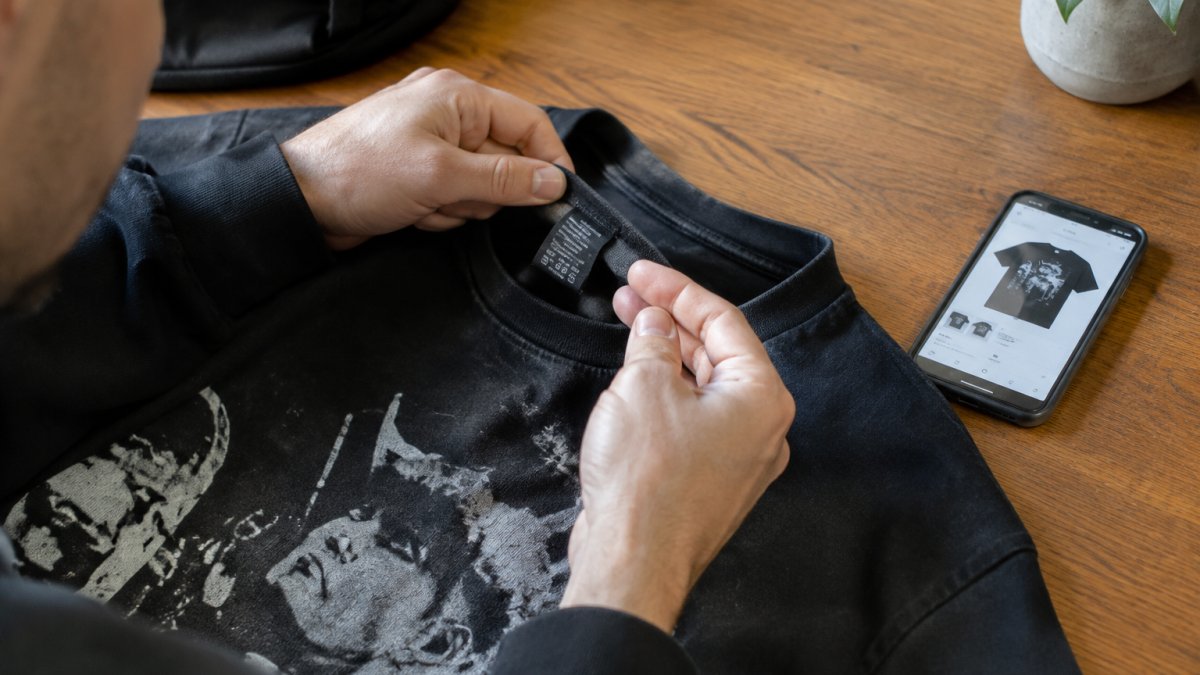
Run this checklist on any piece you are about to buy:
- Neck tag is printed or woven cleanly, not a flimsy sticker
- Stitching is even at the hem, sleeves, and side seams
- Print feels soft and bonded, not cracked or plastic
- Fabric weight matches the stated spec
- Blank manufacturer is named, not hidden
- Edition number or drop record exists somewhere official
The blank matters. A tee built on a known blank has a spec sheet you can check against the listing.
Verifying the limited claim. Garment quality tells you whether the piece is well made. Provenance tells you whether it is actually limited. Check these in order:
- Edition size. Can the brand state the exact number produced? A published number ties to a production order; a vague "limited quantities" does not.
- Release record. Is there a dated drop page, lookbook, or announcement that still exists? Brands that delete the release page after sellout remove the evidence that would confirm the run.
- Restock history. Search the product name and the brand together. Repeated "final" restocks cancel the limited claim.
- Numbering or tagging. Numbered pieces, printed inner neck tags, or a drop-specific label are stronger signals than a generic brand tag.
- Resale supply. Check the resale market 60 days after the drop. Thin, stable supply supports a capped run; a flood of listings within weeks suggests a larger production than advertised.
Counterfeits and resale scams. Limited pieces attract fakes precisely because resale prices are higher. Common risks include counterfeit garments sold with copied tags, sellers using stolen photos of a genuine piece, and "pre-order" listings for drops that have not happened. Verify the seller's history, ask for dated photos of the actual item including the neck tag, and be cautious of prices far below the going resale rate.
Impulsive buying. Scarcity is designed to shorten decision time. Before a drop, decide your maximum price and the size you need, and check the edition size and return policy while the window is open. A piece that is genuinely limited will still be documented after the drop; one that disappears from the record was probably never limited in the first place.
For a deeper walkthrough on judging build quality, see our guide on how to spot high quality streetwear.
Inside Limited Streetwear Drops: Production to Sellout
A limited drop is a supply chain decision before it is a marketing one. The run gets planned, printed, counted, and closed, and each stage leaves a record you can check.
The process usually looks like this:
- Design locks and the edition size is set
- Blanks and print materials are ordered to that count
- Production runs as a single batch
- Inventory goes live at a fixed time
- The window closes on sellout or deadline
What separates a genuinely limited run from a standard release is what happens at each step.
Design and edition size. The edition size is decided before any blanks are ordered. A brand that commits to 300 pieces orders materials for 300 pieces, not 3,000. This is the point where the limited claim is either real or rhetorical.
Sampling and pre-production. A brand that can describe its blank, print method, and sample revisions has a production record; one that cannot is improvising.
Production quantity. Small-batch production is what makes limited drops work for independent labels. A factory run of a few hundred units is affordable, traceable, and predictable.
Release planning and distribution. A real drop has a published date and time, a stated quantity or per-person limit, and a clear end condition.
The closing window. The window closes on sellout or a deadline, and it stays closed. A restock two weeks later usually means the first run was never capped.
What most guides miss is that the production record is the proof. A brand that can show its order quantity, its blank specification, and its release date has nothing to hide.
Watch out: a drop page that shows a countdown timer but no edition size, no blank specification, and no release record is marketing, not documentation. Treat the timer as decoration until the production details exist.
What Limited Editions Do to Streetwear Resale Value
Limited editions can support resale value when supply is fixed.
Scarcity plus cultural relevance equals collectibility. When a drop sells through and never restocks, the resale market becomes the only source. Prices hold or climb if the design stays relevant.
But resale value is not automatic. It depends on:
- Edition size, smaller runs hold better
- Design quality and wearability
- Brand trajectory and community strength
- Condition, since worn pieces lose value fast
If you want to understand how quality and price connect to long-term value, our breakdown of premium vs budget streetwear covers what you are actually paying for.
Streetwear Collecting and Preservation Done Right
Collecting limited streetwear is about condition and documentation, not volume. A single well-kept piece beats ten worn-out ones.
Preservation rules we follow:
- Wash cold, inside out, and air dry to protect prints
- Store flat or folded, never on a wire hanger
- Keep the original tags and packaging
- Photograph the neck tag and edition details on arrival
- Log the drop date and edition size in a note
Print texture is the first thing to degrade. High-density prints crack when heat-treated repeatedly, so skip the dryer.
Documentation is your resale insurance. A buyer trusts a piece with a dated drop record and clear photos far more than a vague claim of rarity.
Shop the Next GOODVIBE Limited Drop
GOODVIBE builds limited drops that bridge SoCal streetwear and the XRPL digital frequency, with fixed runs and closing windows. Our CORE and RETRO CORE lines carry the same principle: cohesion between earth and code, released in capped batches.
Our current SEASONAL OVERRIDE pieces, including the "Ghost in the Grid" boxy tee and the "Circuit Circle" CVC tee, are built on named blanks.


If you are ready to move, browse our standout pieces and see what is still live.
The difference between a real limited edition and a marketing label comes down to one thing: proof. Capped quantities, closed windows, documented runs. GOODVIBE builds every drop on those rules, with exclusive limited releases, CORE and RETRO CORE collections, and tech-inspired apparel that blends SoCal streetwear with the XRPL digital frequency. Get started with GOODVIBE and shop inventory that earns its "limited" label.
Frequently Asked Questions
How can you tell if a streetwear item is genuinely limited edition?
Check whether the brand states an edition size or a fixed release window, then look for a restock history. A genuinely limited release usually names its quantity or sells through once and stays gone. If the same piece reappears in identical form months later, the limit was marketing rather than production. Also look for numbered tags, drop-specific neck prints or campaign names, since these mark a piece as part of a defined run rather than standard inventory.
Why do streetwear brands release limited drops?
Limited streetwear drops create scarcity and exclusivity, which Fortune Business Insights identifies as demand drivers in a market projected to reach $397.97 billion in 2026. A short release window concentrates buyer attention, builds brand loyalty and gives small labels a sellout they can point to. It also lets a brand test a design without committing to mass production, which lowers inventory risk on experimental graphics and seasonal capsule collections.
Are limited-edition streetwear pieces worth more on resale?
Not automatically. Resale value depends on edition size, how many people still want the piece, condition and whether the brand has flooded the market since. A small run with strong cultural relevance holds value better than a large run labelled exclusive. Check completed sales rather than asking prices before you assume a piece has gained value.
What should you check before buying limited-edition streetwear online?
Confirm the release date and whether the drop has closed, and read the fabric and blank specifications.
